ProVisual
3D Architectural Visualization Pricing in NYC: A 2026 Guide for Developers & Architects
Introduction
New York City’s skyline is a living organism — constantly evolving with super-tall towers, adaptive reuse projects, and luxury residential infills. In this hyper-competitive real estate market, a static floor plan or a vague sketch no longer secures funding or moves pre-construction units. The currency of persuasion is 3D Architectural Visualization.
However, if you have recently requested quotes from NYC-based studios, you have likely experienced “sticker shock.” The difference between a budget render and a premium, investment-grade render is not just profit margin; it is the difference between a generic model and a marketable asset that closes deals.
This guide cuts through the noise. We will analyze 3D Architectural Visualization Pricing in NYC, break down the specific costs for interiors, exteriors, and animations, and provide actionable advice on how to select a partner in the current economic climate.
The NYC Premium: Why Visualization Costs More Here
Before we dive into the numbers, it is crucial to understand why 3D Architectural Visualization Pricing in NYC operates on a different tier than the national average. You aren’t just paying for software licenses or rendering time.
First, the expectation of context is paramount. A visualization for a building in Ohio might require a generic tree line. A visualization for a High Line-adjacent condominium requires exacting detail of the surrounding elevated park, the specific brick texture of the neighboring historic district, and the correct hue of the Empire State Building at sunset. Second, the stakes are higher. In a city where pre-construction units sell for millions, a visualization that feels “off” can doom a sales campaign. You are paying for risk mitigation and psychological accuracy.
Detailed Cost Breakdown for the NYC Market
When budgeting for a project, it helps to categorize the output. Below is a detailed analysis of the three most requested services.
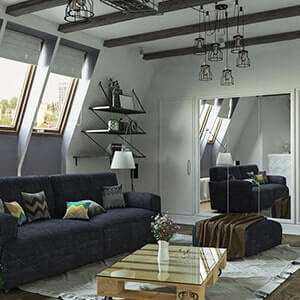
1. Studio Rendering (Interior)
Price Range: 4,500 per image
At the lower end (1,500), you will find studios using stock assets and generic lighting setups. These are suitable for co-working spaces or basic spec sheets. However, for a luxury penthouse in Tribeca, you are looking at the higher bracket (4,500). At this level, every detail is customized: the stitching on the leather sofa, the reflection on the matte marble flooring, and the view out the window (which must match the exact floor-to-ceiling height of the building). The cost rises if the stylist requests specific art pieces or custom millwork.
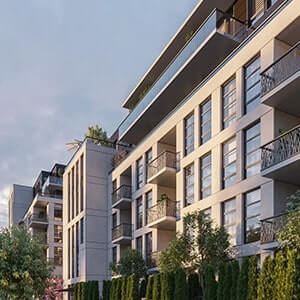
2. Complex Exterior (High-rise in Midtown)
Price Range: 12,000+ per image
This is the flagship product of most NYC firms. A “complex exterior” implies a super-tall, skinny tower or a complex geometric facade (e.g., a BIG or SHoP design). The base modeling fee (4,000) covers the hard structure. The premium (12,000) lies in the environment. This includes:
Accurate surrounding urban massing (context blocks).
Street-level retail integration.
Specific lighting scenarios (sun studies for winter solstice vs. summer evening).
Entourage (realistic NYC taxis, subway entrances, specific pedestrian crowds).
If the project involves a rezoning proposal or a community board presentation, the price tends toward the $12k mark due to the need for civic accuracy.
Comparative Pricing Table
To provide clarity, here is a structured look at estimated rates for the NYC market for high-quality, commercial-grade work.
| Service Category | Estimated Price (USD) | Typical Turnaround | Best Used For |
|---|---|---|---|
| Studio Rendering (Interior) | 4,500 | 5–10 Business Days | Sales galleries, interior designer pitches, Airbnb layout visualization. |
| Complex Exterior (High-rise in Center) | 12,000+ | 10–15 Business Days | Marketing brochures, zoning approvals, website hero images. |
| Aerial Context Shot | 7,000 | 5–7 Business Days | Site analysis, masterplan proposals. |
| Animation Video (30 seconds) | 60,000+ | 15–25 Business Days | Launch events, TV commercials, fundraising campaigns. |
| VR/AR Interactive Tour | 30,000+ | 3–5 Weeks | Sales center installations, off-plan buyer engagement. |
Factors Influencing the Cost in NYC
Understanding why your quote fluctuates helps you negotiate and allocate budget. Here are the three hidden levers of cost.
1. Complexity of 3D Modeling
Not all models are created equal. If you provide a Revit or Rhino 3D file that is “watertight” (closed polysurfaces), you save the studio 20 hours of clean-up. If you hand them a sketch on a napkin and a PDF of a facade detail, they must build the geometry from scratch. Complexity of 3D modeling is the largest variable. Curved glass, intricate metal mesh panels, and parametric facades cost significantly more than rectangular concrete slabs. For a high-rise in the center of Manhattan, the modeling must account for structural elements that will be visible through the glass, which doubles the polycount.
2. Lighting & Weather Scenarios
NYC marketing demands versatility. A single still image may be required to render three ways: “Daytime,” “Blue Hour,” and “Night.” Each scenario requires a different HDRI map, different interior lighting setups (turning on millions of virtual lights creates massive render times), and distinct shadow studies. Realistic lighting using path-tracing engines like V-Ray or Corona Renderer is computationally expensive. Furthermore, if the client requests a snowstorm, heavy rain, or a hazy summer day, the lighting team must adjust dispersion and reflectivity levels, adding to the production timeline.
3. Urban Environment & Context
A building does not exist in a vacuum, but many low-cost firms treat it as such. In NYC, the urban environment is the story. To accurately place a new high-rise, the visualization artist must model the surrounding 2-3 blocks with “proxy” geometry. This includes the distinct look of NYC water towers, the specific rust color of the fire escapes, and the street grid layout. High-end studios use photogrammetry scans of the actual city to ensure that the sun hits the new building at the exact angle it would hit the old one. This contextual accuracy is often the difference between a render that looks “fake” and one that looks prophetic.
Specialized Mentalities: Stylized vs. Photorealistic
When requesting a quote, you must decide on the artistic direction.
Photorealistic is the standard for luxury condo marketing. The goal is to trick the eye into believing the photo was taken on location. This requires painstaking texture work and is generally more expensive because flaws cannot exist.
Stylized (sometimes called “clay renders” or “watercolor effect”) is increasingly popular for early-stage community board approvals or historical society presentations. It removes the “scary” commercialization of a project and makes it look academic. Stylized workflows are often cheaper because they avoid texture mapping and complex material shaders, focusing solely on form and shadow.
How to Choose a NYC Visualization Studio
You have the budget; now you need the partner. Here are four criteria for selection.
Portfolio Matching
Do not hire a firm that only shows sprawling suburban homes to render your SoHo loft. Look for specific interior work if you are selling finishes, or specific exterior work if you are selling a facade. The studio should have examples of NYC-specific contextual rendering on their site.
The Revision Policy
The biggest “hidden cost” in visualization is internal reviews. Before signing, ask: How many rounds of revisions are included? Most ethical studios offer 2-3 rounds (e.g., Rough model -> WIP lighting -> Final). However, cheap studios offer “unlimited revisions,” which means they start low-quality and hope you tire of asking for fixes. Expensive studios charge by the hour for changes requested after the “final lock” stage.
Understanding the Technology
Ask if they use real-time engines (Unreal Engine/Twinmotion) or offline ray-tracing (V-Ray/Corona).
Real-time: Cheaper for animations, but often lacks photorealistic material depth.
Ray-tracing: Slower and more expensive, but the standard for still 3D Architectural Visualizations in high-end print media.
The “City Environment” Test
During your discovery call, ask the vendor: “How do you handle the environment?” If they say they download a generic city block from a 3D warehouse, be cautious. If they describe a workflow involving GIS data, Google Maps projection, and custom modeling of landmarks, you have found a professional.
Conclusion: Maximizing ROI on Visualization
For developers and architects in New York City, 3D Architectural Visualization is not an expense; it is a pre-sales engine. While prices ranging from 4,500forasingleinteriorshotto60,000 for a high-end animation video may seem steep, consider the alternative. A $50 million condo project that launches with poor visuals may sit on the market for six extra months, costing millions in carrying costs.
To maximize your budget:
Tier your assets: Spend the 12konyour”hero”exteriorshot.Use800 budget renders for minor storage rooms or back-office views.
Plan early: Rush fees (2x the standard rate) are common in NYC. For a critical launch, lock in your studio 8 weeks before the render is needed.
Trust the process regarding lighting: The best studios in NYC charge a premium for lighting because they understand that a building looks different at 4 PM in December versus 12 PM in June. That seasonal specificity sells units.
In the competitive landscape of 2026, the firm that invests in high-fidelity, context-aware visualization is the firm that closes the deal. Use this guide to benchmark your next RFP, and ensure that your view of Central Park looks exactly as good as you promised.
Complete Range of 3D Architectural Visualization Services from ProVisual.pro
ProVisual.pro offers a full suite of premium, photorealistic 3D visualization services specifically tailored for architects, real estate developers, interior designers, and property marketers in New York City. We serve clients across all five boroughs—Manhattan, Brooklyn, Queens, the Bronx, and Staten Island—with a special focus on luxury condos, adaptive reuse projects, and super-tall tower visualizations.
Our specialty is delivering the contextual accuracy that NYC demands: correct water tower placement, accurate brick textures for historic districts, and skyline views that match the exact floor-to-ceiling height of your building. Whether you are presenting to a community board in SoHo, launching a sales gallery in Hudson Yards, or marketing pre-construction units to international buyers, ProVisual.pro delivers commercial-grade, UDRB-ready, photorealistic visualizations that close deals.