 ProVisual
How Much Does 3D Visualization Really Cost in Belgium — And Why a Brussels Studio Charges €5,000 for What a Freelancer Offers for €200
June 15, 2026
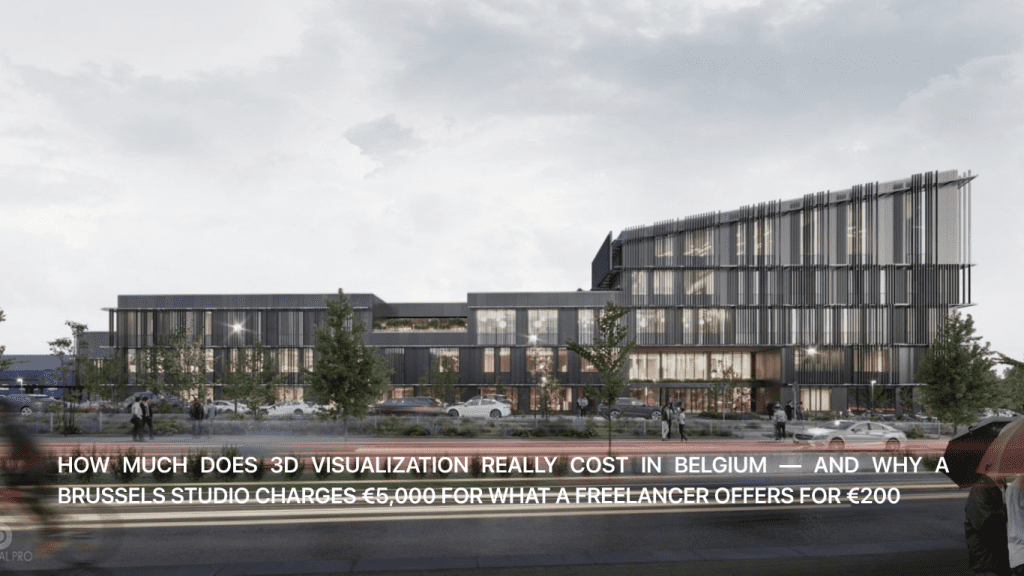
3D Visualization Costs in Belgium’s real estate and architectural market, 3D visualization has become a critical part of how projects are sold, approved, and financed. Whether it is a residential development in Brussels or a large-scale commercial project, high-quality CGI is no longer an optional marketing tool but a core part of the decision-making process. Yet one question consistently comes up among developers and architects: why does 3D visualization in Belgium vary so dramatically in price, and why do studios often charge several thousand euros while freelancers offer seemingly similar work for a fraction of the cost?
To understand this gap, it is important to look beyond the final image and focus on the structure behind production. A professional studio such as PROVISUAL.PRO operates within a regulated European business environment where costs extend far beyond rendering time. In Belgium, labor taxation, insurance obligations, software licensing, and production management all contribute significantly to pricing. According to European construction market data published by Eurostat, professional services in the construction and design sector across Western Europe consistently reflect higher operational costs compared to freelance markets operating outside the EU regulatory framework Eurostat Construction Statistics.
At first glance, the difference between a €300 freelance render and a €3,500 studio project may appear purely visual. In reality, it reflects entirely different production systems. A freelancer typically operates alone, often without formal project management, legal liability coverage, or standardized BIM integration. A studio in Brussels, however, works with structured pipelines that include modeling specialists, art directors, post-production teams, and technical supervisors ensuring compliance with architectural accuracy.
This difference becomes especially visible in complex developments where BIM visualization in Europe is required. Studios are expected to interpret CAD files, architectural drawings, and material specifications with precision that aligns with construction reality. Any deviation can result in costly miscommunication during the building phase. This level of responsibility is one of the main reasons architectural CGI in Belgium cost structures are significantly higher for studios than for independent artists.
Time is another underestimated factor. A low-complexity image in a professional studio typically starts around €590 per image, while high-complexity exterior scenes can reach €950 or more. These numbers are not arbitrary. They reflect not only rendering time but also revision cycles, client communication, quality assurance, and compliance with deadlines often tied to investment presentations or planning approvals. In contrast, lower-cost freelancers may reduce iterations or skip technical validation steps, which increases risk for the client later in the project lifecycle.
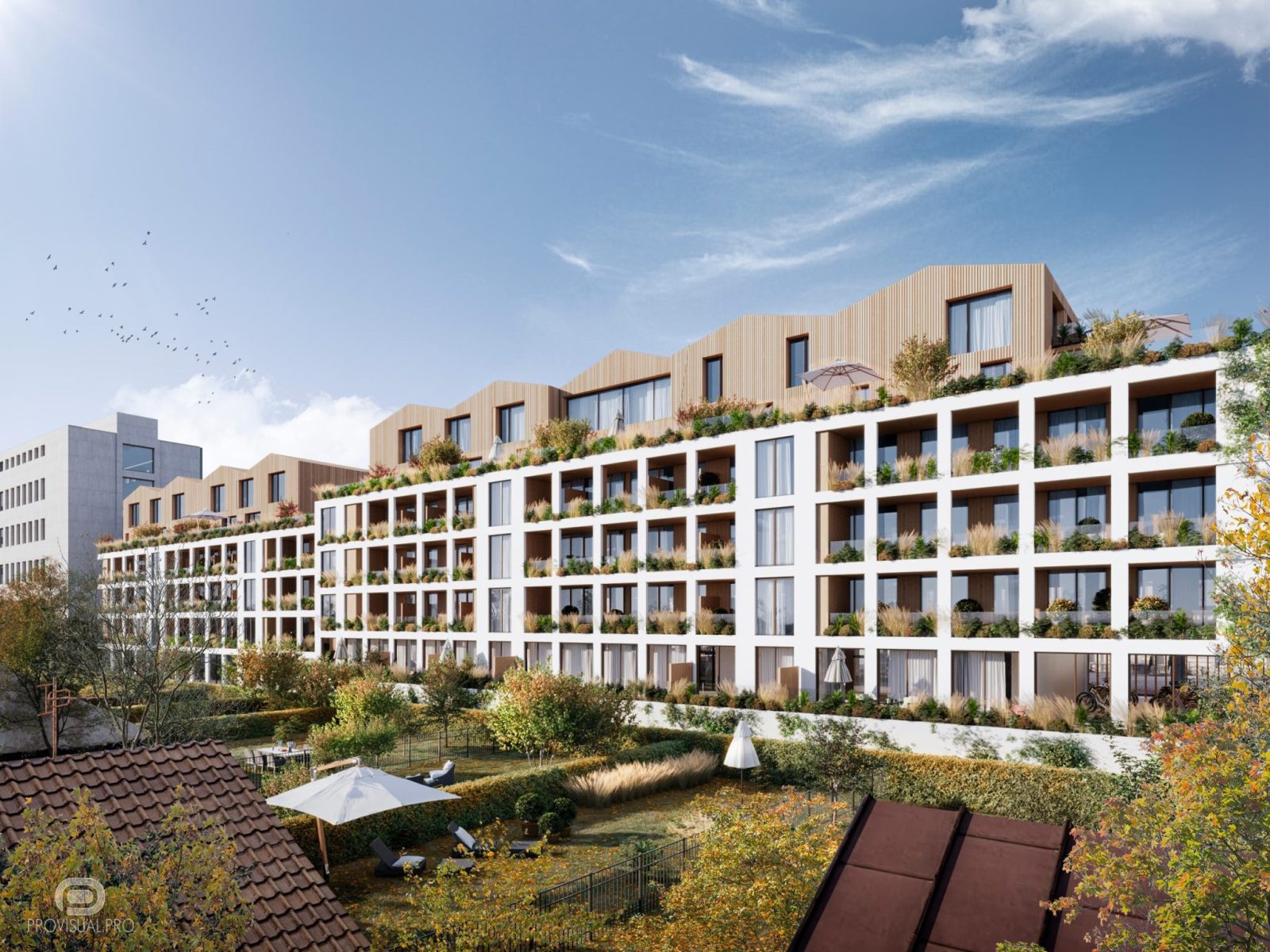
There is also a hidden layer of cost that clients rarely see. Studio environments in Belgium carry office rental expenses in cities like Brussels, legal accounting structures, employee benefits, and continuous investment in hardware and rendering infrastructure. These operational realities shape pricing more than the rendering itself.
The misconception that “cheap equals efficient” often leads to the opposite outcome. Projects that begin with low-cost visualization frequently require corrections, rework, or even complete redrawing when architectural accuracy is not aligned with real construction constraints. In practice, this results in higher total expenditure than investing in a properly structured studio workflow from the beginning.
From a developer’s perspective, 3D visualization should be treated as part of risk management rather than simple marketing. A reliable visual output reduces uncertainty, supports investor presentations, and accelerates approvals. In this context, paying for structured production is not a premium; it is a safeguard.
If we consider the broader European context, Belgium sits within a market where quality expectations are particularly high due to dense urban development and strict planning regulations. This environment naturally pushes studios toward higher standards and, consequently, higher pricing structures.
For developers and architects evaluating options, the real question is not whether cheaper alternatives exist, but whether they align with the financial scale and risk profile of the project. In most serious developments, the answer tends to favor structured studio production.
If you are planning a project in Belgium and need architectural visualization that aligns with investor expectations and regulatory standards, contacting a professional studio early in the process can significantly reduce downstream risks. A tailored consultation allows you to define scope, complexity, and delivery expectations before production begins, ensuring that the final result supports both design intent and commercial objectives.