 ProVisual
Architectural Visualization in Belgium: How Developers Reduce Approval Delays and Accelerate Property Sales
April 22, 2026
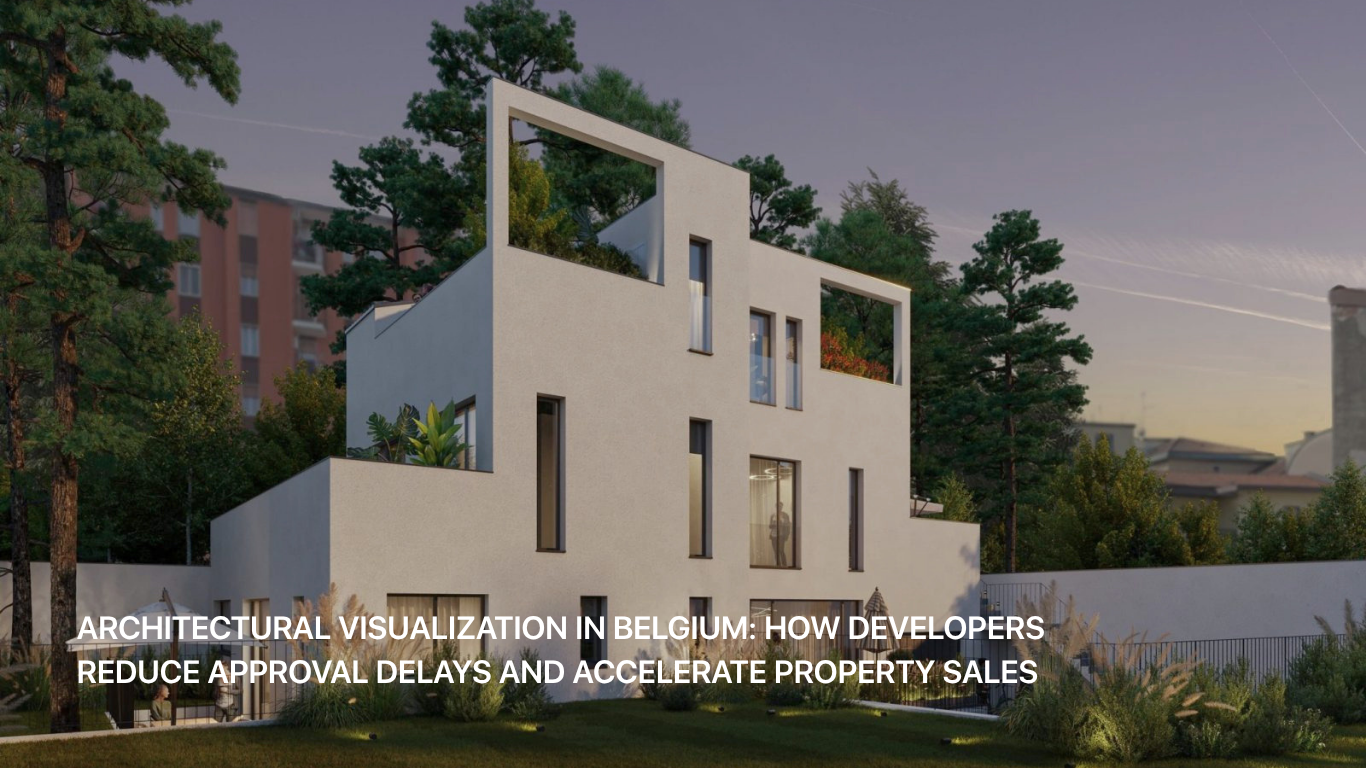
Belgium is one of the most complex real estate markets in Europe, not because of demand, but because of regulation, context sensitivity, and buyer expectations. In this environment, architectural visualization in Belgium has evolved from a presentation tool into a critical component of project strategy.
Today, developers who still rely on generic 3D renders often face longer approval cycles, slower sales, and increased resistance from both authorities and local communities.
The Belgian Context: Regulation Meets Perception
Unlike less regulated markets, Belgian projectontwikkeling operates within a dense framework of EPB requirements, BEN standards, and regional planning systems such as planning permission. Each region—Brussels, Flanders, and Wallonia—applies its own nuances, but one thing remains constant: projects are evaluated not only on technical compliance, but also on how they integrate into the existing urban fabric.
At the same time, buyers in Brussels, Antwerp, and Ghent have become significantly more selective. They are not buying square meters—they are buying a perception of quality, atmosphere, and long-term comfort.
This creates a dual pressure on developers: convincing municipalities while simultaneously appealing to an increasingly sophisticated market.
You can check the real estate market in Belgium on Realo
Why Standard Renders Fail in Belgium
A common mistake in real estate marketing Belgium is the use of decontextualized renders. Clean, isolated buildings placed in generic environments may look visually appealing, but they fail in two critical ways.
First, they do not address the primary concern of local authorities and residents: how the project will affect the existing streetscape. In Belgian cities, where architectural continuity and scale are highly sensitive, this often leads to objections and delays.
Second, such visuals lack emotional credibility. Belgian buyers are highly attuned to material authenticity. Brick textures, subtle color variations, and the soft, diffused northern light play a crucial role in how a project is perceived. When these elements are missing or poorly executed, the project feels artificial—and trust drops.
Visualization as a Tool for Permit Strategy
High-end architectural visualization Belgium is increasingly used as part of the permit strategy rather than just marketing.
Photomontage, when executed with precise camera matching, correct perspective, and real environmental lighting, allows the project to be perceived as a natural extension of the existing city. This directly addresses the concerns of municipalities and neighboring residents.
In practice, developers using accurate contextual visualization often experience smoother communication during the permis phase. Projects are understood faster, objections become more specific and manageable, and approval timelines can be significantly reduced.
In a market where delays can cost thousands per day, this is not a visual upgrade—it is a financial decision.
Selling High-Value Real Estate Under BEN Standards
Energy-efficient construction aligned with BEN standards increases both development costs and final pricing. As a result, promotion immobilière in Belgium increasingly depends on perception management.
Buyers must not only understand the technical benefits—they must feel the value.
This is where advanced 3D renders Belgium shift into experiential storytelling. The goal is not to show a space, but to simulate living conditions. Light behavior becomes critical, especially under Belgium’s often overcast sky, where contrast is low and reflections are subtle. Materials must respond correctly to this light—brick, concrete, stone, and wood need to feel physically accurate.
Interiors must avoid the “catalog effect.” Overly perfect spaces reduce credibility, while controlled imperfection—slight asymmetry, natural clutter, realistic lighting falloff—creates trust.
This level of detail directly influences buyer psychology and reduces resistance to premium pricing.
Interactive Visualization as a Sales Accelerator
The integration of VR, AR, and 360° tours is no longer a novelty in real estate marketing Belgium—it is becoming an expectation.
In markets like Knokke, where buyers are often remote investors, or Ghent, where competition is high, interactive visualization provides a measurable advantage. It allows users to understand scale, layout, and spatial relationships in a way static images cannot.
More importantly, it reduces cognitive effort. When buyers do not need to interpret plans, they make decisions faster.
This is one of the key reasons why developers using immersive tools often report shorter sales cycles and earlier deposits.
Case Insight: MARNIX, Brussels
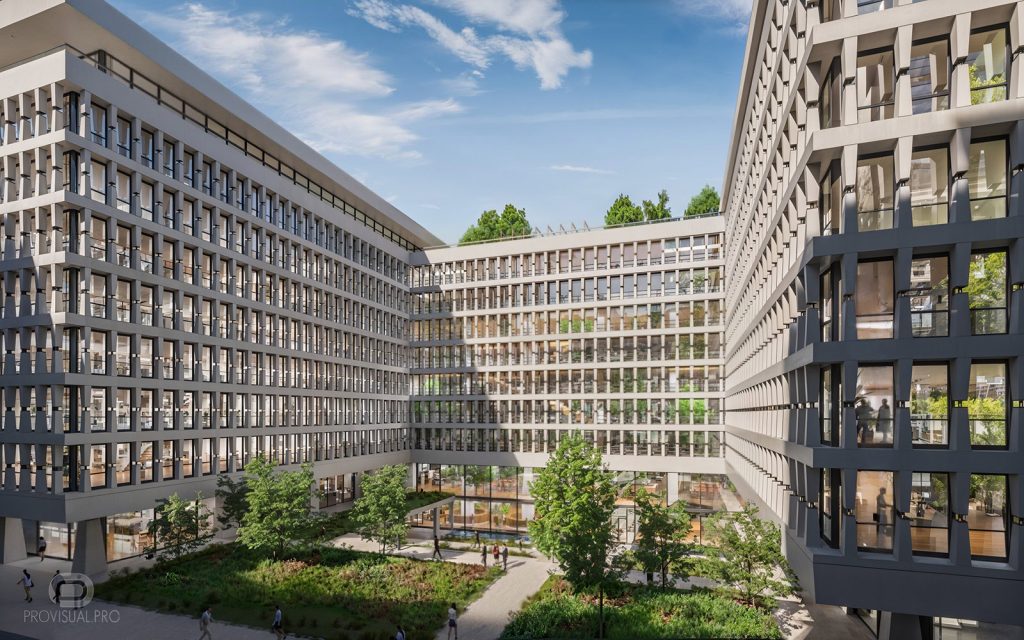 APOCALYPTIC PROJECT MARNIX – 3D VISUALIZATION OF THE FUTURE
The MARNIX project in Brussels illustrates how visualization can influence internal alignment as well as external communication.
By developing visuals that accurately reflected materiality, scale, and atmosphere, the project team was able to reduce uncertainty during decision-making stages. This resulted in faster approvals and a more confident transition into the marketing phase.
A Strategic Approach to Visualization
In Belgium, architectural visualization is no longer a decorative layer added at the end of a project. It is a strategic instrument that influences permits, pricing, and sales velocity.
Developers who treat it as such gain a measurable advantage in both time and market positioning.
Request a free consultation. We will analyze your project and define a visualization strategy tailored to the Belgian market, helping you move faster from concept to approval and from launch to sale.