 ProVisual
How to Speed Up Building Permit Approval in Belgium in 2026: Key Changes in Urban Planning Regulations
May 5, 2026
Why Building Permit Approval Has Become More Difficult in Belgium
In 2026, obtaining a building permit in Belgium has become significantly more difficult than it was only a few years ago. Across Brussels and Flanders, local authorities are applying stricter urban planning controls focused on architectural integration, visual impact and compatibility with the surrounding environment. For developers, architects and real estate investors, the Omgevingsvergunning or Permis d’urbanisme has become one of the most unpredictable stages of the entire project.
Approval timelines are getting longer, revision requests are becoming more common and many projects are being rejected even when they technically comply with zoning regulations. Belgian planning commissions are now paying close attention to how a project fits into the real urban context rather than evaluating only technical documentation.
What Belgian Planning Commissions Really Analyze
In Brussels, authorities increasingly examine the relationship between new façades and neighboring buildings, the perceived scale of the development, material consistency and the visual experience from public streets. In Flanders, many Omgevingsvergunning applications are delayed because the visual documentation does not clearly demonstrate the real impact of the future building on the local landscape.
Why Standard Architectural Renders No Longer Work
Traditional architectural renders are no longer enough. Planning authorities want to see exactly how the future project will appear inside the existing city fabric. Generic 3D images on a neutral background rarely provide enough information for urban planning committees.
One of the reasons behind this shift is the growing number of objections submitted by local residents. Municipalities are trying to reduce post-approval conflicts by identifying visual and contextual issues during the review phase. When a project includes vague or overly commercial visuals, officials often request additional clarification.
Architectural Photomontage as a Permit Approval Tool
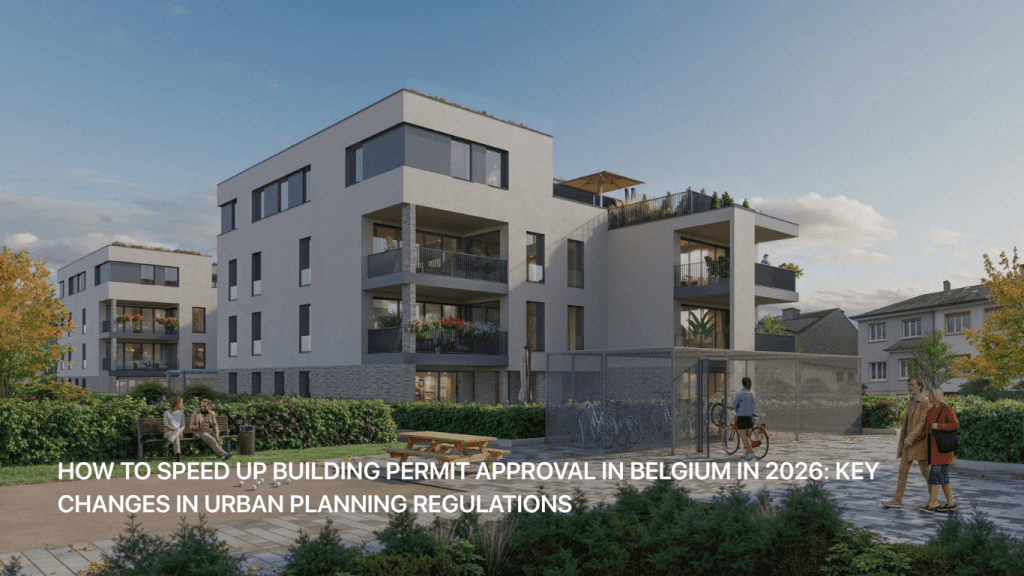
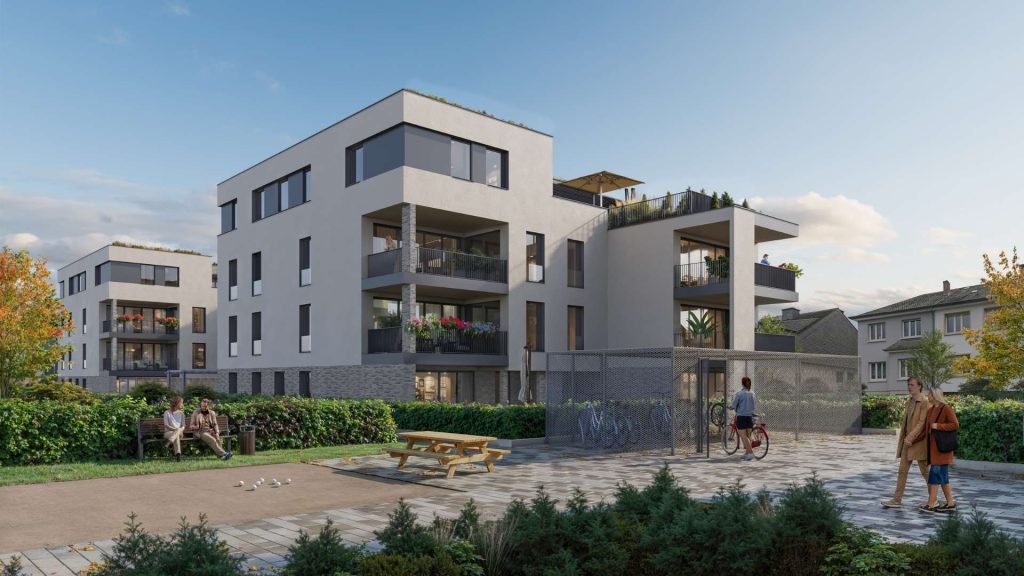
As a result, high precision architectural photomontage has become a critical tool for building permit applications in Belgium. Today, photomontage is not only a marketing image for investors or clients. It is a technical communication tool used to demonstrate how a future building integrates into an existing street, neighborhood or landscape.
Architecture firms that secure faster approvals are often the ones presenting highly realistic contextual visualizations. Authorities expect to see accurate human-scale perspectives, realistic materials, natural shadows and a clear relationship between the proposed building and its surroundings.
In several Brussels municipalities, projects supported by realistic photomontages are more likely to avoid additional administrative requests. This can reduce approval delays and lower the risk of redesigning the project during the permit process.
Brussels and Flanders Are Applying Stricter Urban Rules
The Belgian market is also changing because of stricter environmental and heritage requirements. New developments increasingly need to justify their visual presence in sensitive urban areas and demonstrate a sustainable integration into the neighborhood. In this context, architectural visualization plays a major role.
Creating architectural renderings for Belgium requires much more than producing attractive CGI images. It requires an understanding of local light conditions, Belgian urban density, Flemish streetscapes, historical districts and the visual expectations of planning authorities. Urban planning commissions quickly recognize generic international renders that do not reflect the real local context.
Many international developers discover this too late. Standard visuals created for foreign markets often fail to meet Belgian administrative expectations, making projects appear less credible during the approval process.
Building permit applications in Belgium in 2026 therefore require a more technical and context-driven approach to architectural visualization. The goal is not simply to impress but to reduce uncertainty for planning authorities and demonstrate that every aspect of the project has been carefully integrated into the real environment.
You can view the property on Immoweb.be
How ProVisual.pro Helps Reduce Permit Delays in Belgium
At ProVisual.pro, we help architecture studios, developers and real estate teams prepare highly accurate architectural photomontages created specifically for Belgian Omgevingsvergunning and Permis d’urbanisme procedures.
Our visualizations are not only designed to look realistic. They are developed to reduce revision requests, anticipate planning objections and help authorities understand the real architectural impact of a project from the first review stage.
Our visualizations are designed to help planning commissions immediately understand the architectural impact of a future development. Through realistic perspectives, accurate site integration and detailed environmental context, we support design teams in presenting stronger and more convincing permit applications.
We regularly work on projects located in Brussels, Antwerp, Ghent, Liège and multiple Flemish municipalities where urban planning requirements continue to become more demanding. Our goal is not only to create visually strong imagery but to deliver a practical approval tool that reduces uncertainty during administrative review.
In today’s Belgian market, where even small visual details can influence the final decision, realistic architectural photomontage can become the difference between months of administrative delays and a significantly faster approval process.
At ProVisual.pro, we create approval-oriented architectural visualizations designed specifically for Belgian planning authorities and urban review commissions.
If your team is preparing a building permit application in Belgium, we can help transform your project presentation into a stronger and more convincing approval tool.